One Design, Printed Three Different Ways
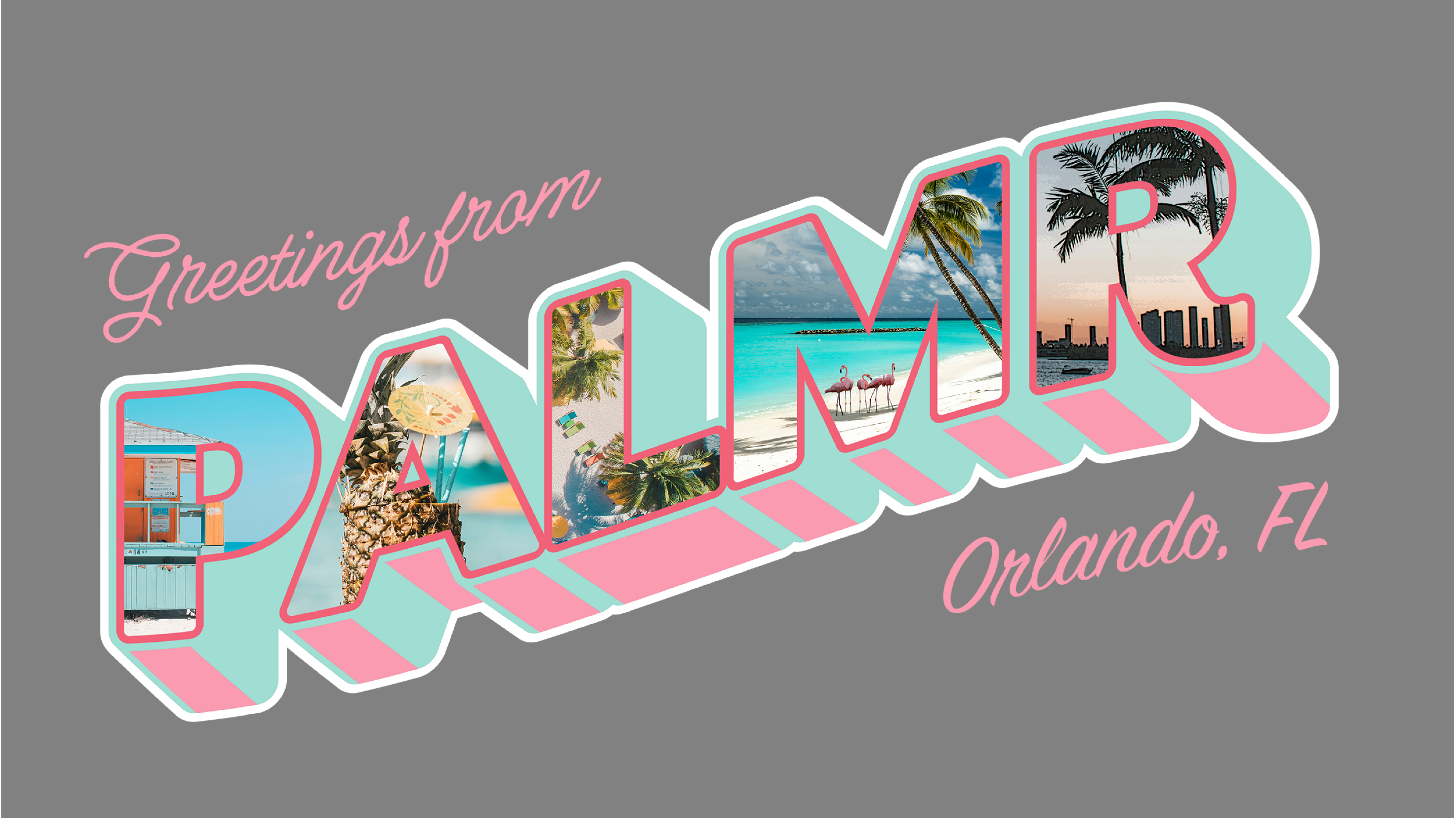
For context, we printed this Palmr Style design on US Apparel’s mineral-washed tee (YJY-4138).
Screen Printing
Not to brag about ourselves, but when it comes to screen printing we are pretty dang good at it. Compared to most other screen printing shops, Threadbird has mastered how to achieve premium quality prints and intricate details on a wide range of products.
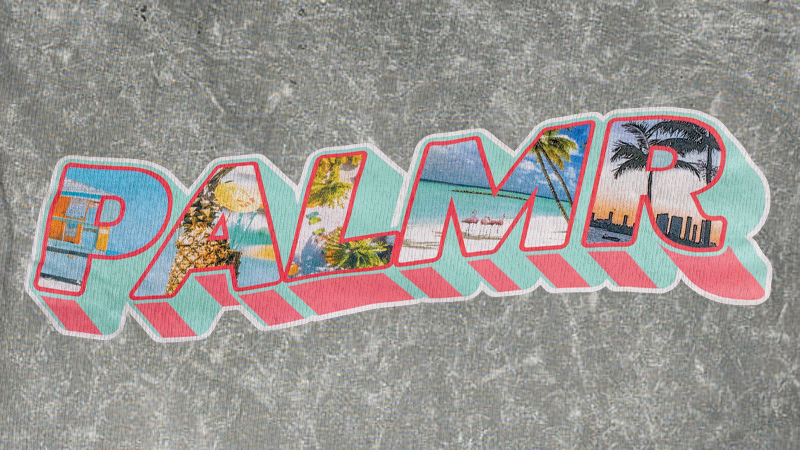
Screen printing is not only our bread and butter but it’s one of our major strengths as a company. With this particular full-color design from Palmr Style, we wanted to capture the high-level of detail and color from the design. To do so, we kicked off this printing experiment by using our speciality printing method known as a Process (Simulated) Printing to recreate the design. Boy oh boy were we impressed with the print outcome!
The results:
The amount of photorealistic detail we were able to replicate was just incredible! Using eleven screens, we blended the unique spot colors from the design to create this vibrant print. Although this method requires more production setup time compared to standard Screen printing, Process Printing shines because it allows greater printing coverage and produces an ultra-soft print.
Our Rating:
Level of Detail: 7
Printing Coverage (Color Saturation): 10/10
Feel of Print: 10/ 10
Strengths:
- Captures intricate design details
- Ultra-soft print
- Printing Coverage & Ink Vibrancy
Weaknesses:
- Production Setup (Time & Cost)
Direct to Garment (DTG)
Direct to Garment isn’t a method that we offer, due to the level of quality that it produces in comparison to screen printing. However for the purpose of this experiment, we wanted to explore how DTG printing compares to screen printing and direct to film printing. What did we find?
The results:
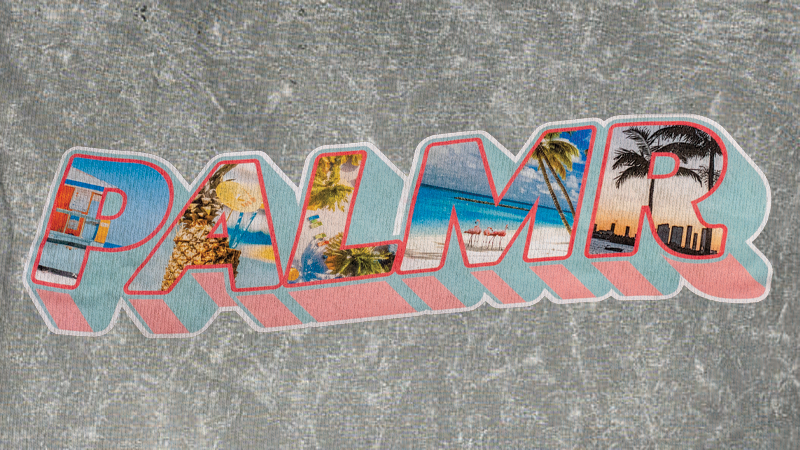
One advantage of DTG is that it allows for printing designs with an unlimited number of colors. This was a noticeable difference between the print outcome compared to DTF and Screenprinting, as you can see in a few areas such as the color vibrancy of the water in the bubble letter M in the printed design. In terms of the print detail, we didn’t notice a significant difference between the print outcome between screen printing and DTG. One noticeable disadvantage of printing with DTG is the amount of print coverage it allows for on garments.
Although DTG is excellent in replicating photorealistic designs, it isn’t optimal for printing designs with solid colors. As you can see in the image below, the color outlines of the Palmr text aren’t nearly as vibrant or accurate in color compared to the screen printed print.
Our Rating:
Level of Detail: 8
Printing Coverage (Color Saturation): 5
Feel of Print: 10/ 10
Strengths:
- Unlimited ink colors
- Capturing photorealistic details
Weaknesses:
- Print Coverage
- Quality & vibrancy of print fades over time
Direct-to-Film (DTF) Transfer
This printing technique is a common choice for printing artwork with a lot of color and design complexity. With this in mind, we were curious to see how DTF transfer method would compare to the print outcome of DTG and Process Printing.
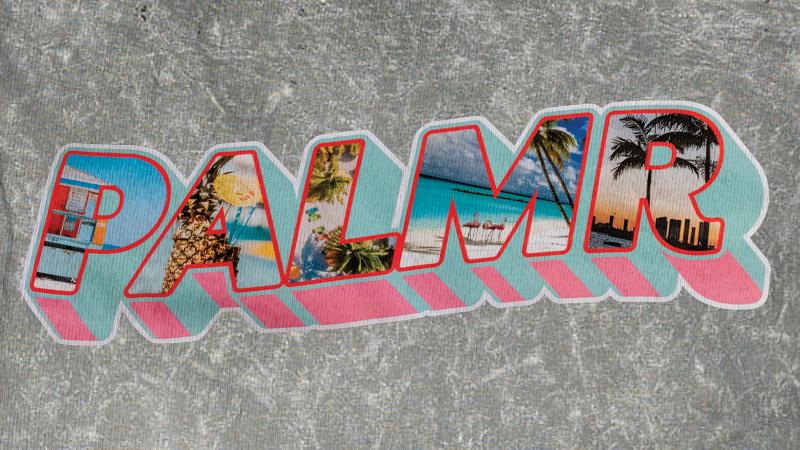
Right off the bat, we noticed how accurately the print captured the little details within the Palmr design. Not only were the details replicated accurately, but they were also very crisp and precise! Unlike DTG, Direct-to-film transfer offers excellent print coverage, in that the entire print is solid and vibrant in color.
Our Rating:
Level of Detail: 10/10
Printing Coverage (Color Saturation): 10/10
Feel of Print: 6
Strengths:
- Captures photorealistic details
- Print Coverage
- Ideal for print small quantities
Weaknesses:
- Heavier look and feel to the print
Which method is the top contender?
In testing and assessing the three different printing methods, we have several takeaways about their varying advantages and disadvantages. Let’s break it down.
DTG vs DTF
For overall quality and design compatibility, Direct-to-film Transfers takes the cake. In comparison to the DTG print, DTF’s print is consistently bright in color and the details within the design are also consistent. Plus the quality of the DTF print is superior, and doesn’t fade with every wash.
Direct-to-film Transfer prints often produce a shiny effect on the print, along with almost a plastic look and feel to it. With this in mind, our Threadbird team went the extra mile to mute the glossy effect by adding a secret ingredient when creating this print.
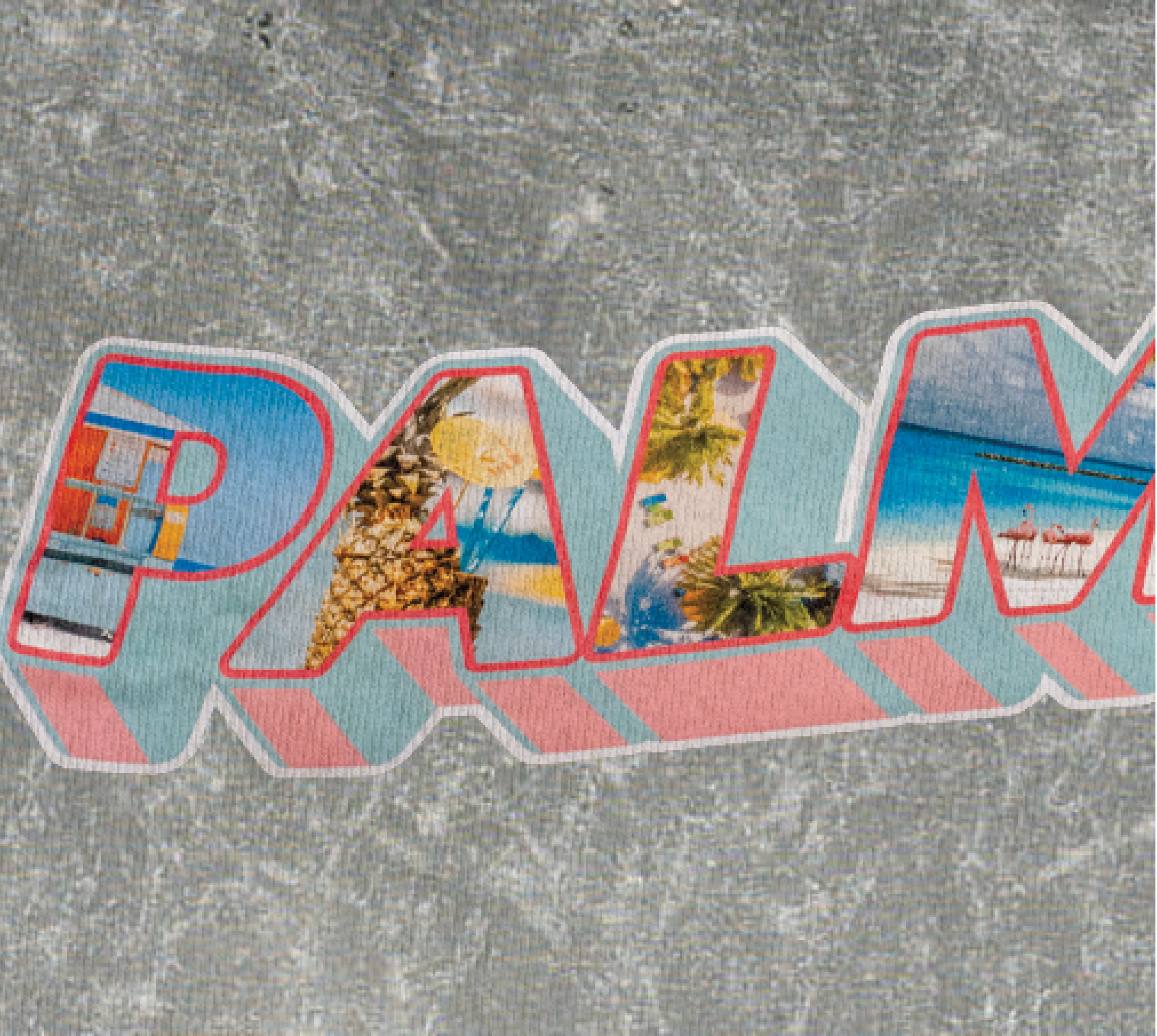
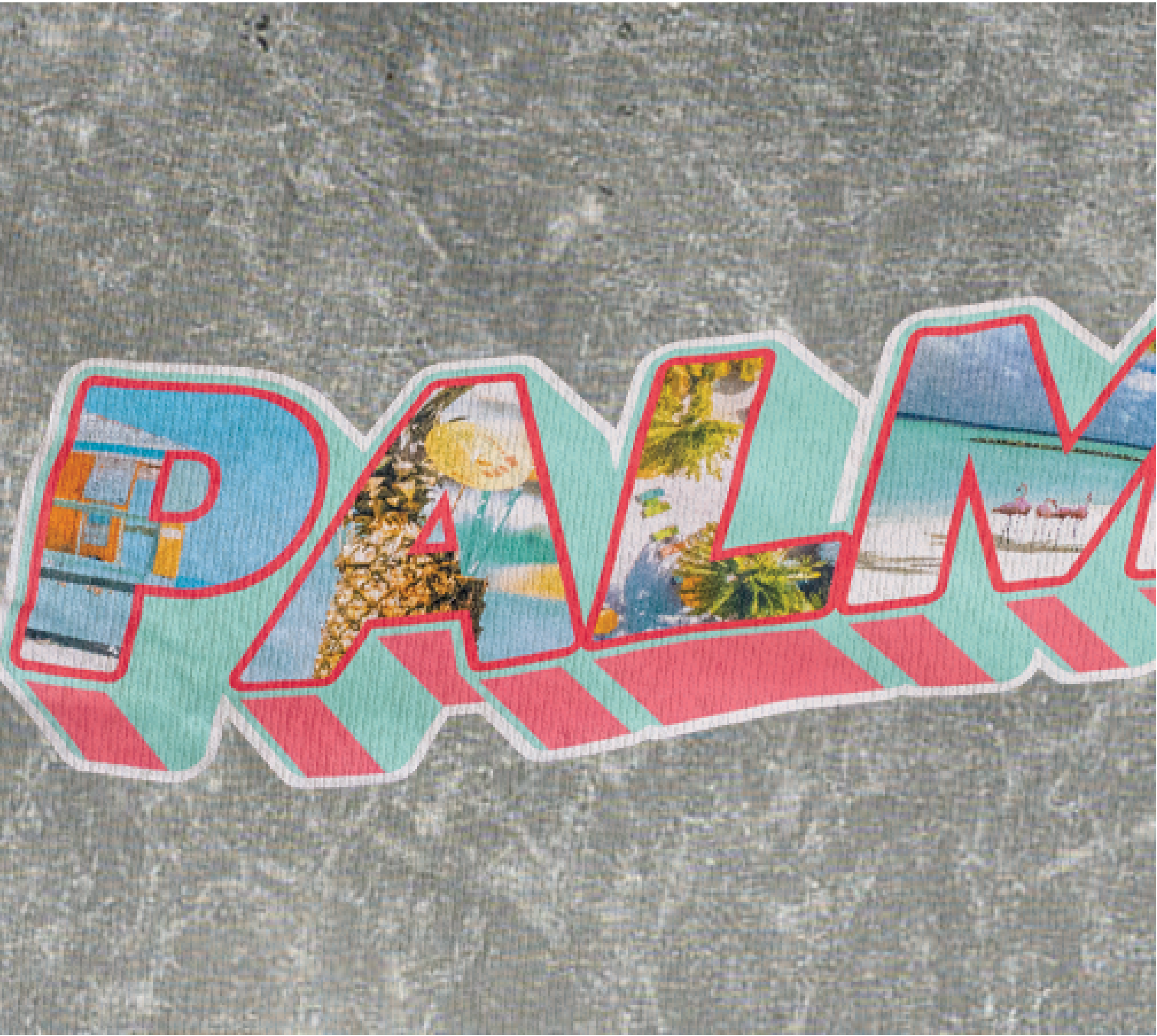
(Left) DTG Print / (Right) DTF Print
Process Screen Printing vs DTF
After evaluating the two prints, we came to the conclusion that these methods share a lot of similarities in terms of the print outcomes they produce. Perhaps we are a bit biased or old school, but Screen Printing continues to be the outstanding winner that checks all of the most important boxes (quality, vibrancy, texture).
The biggest difference we found in comparing the two printed shirts is that the screen-printed design feels extremely soft and almost has a ‘no-touch’ lightweight feel, whereas the DTF print has a glossy-like finish and a plastic feel. The Direct-to-film Transfer print almost looks too realistic, like a photograph with a glossy shine, versus the process-printed design, which looks like it’s embedded into the t-shirt. Most printers don’t go the next step to attempt to mute the glossy-finish, which is why Threadbird’s DTF method is superior in quality. Threadbird’s Full-color Process Printing can accomplish an impressive level of detail, color, and smoothness that is tough to beat!
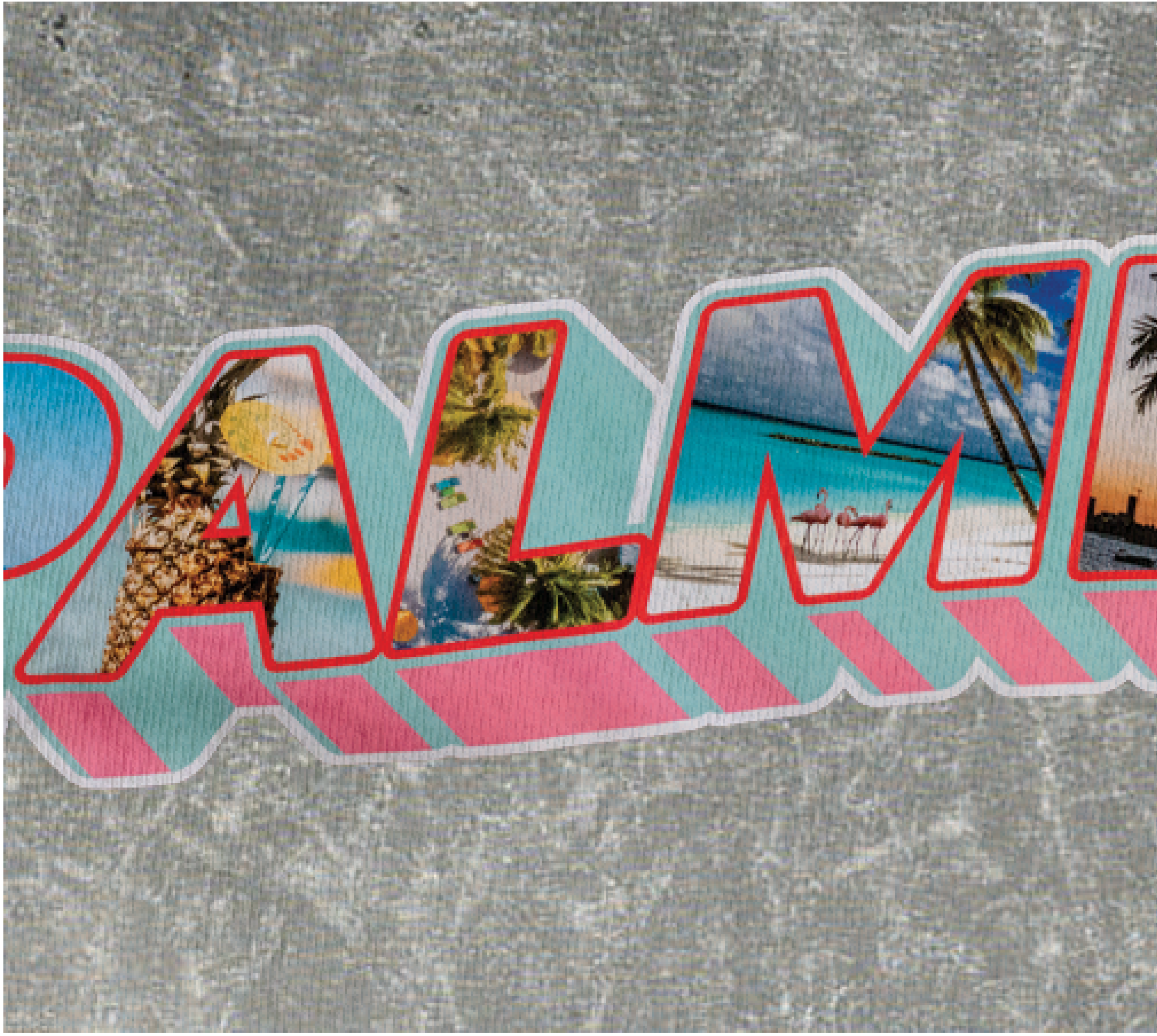
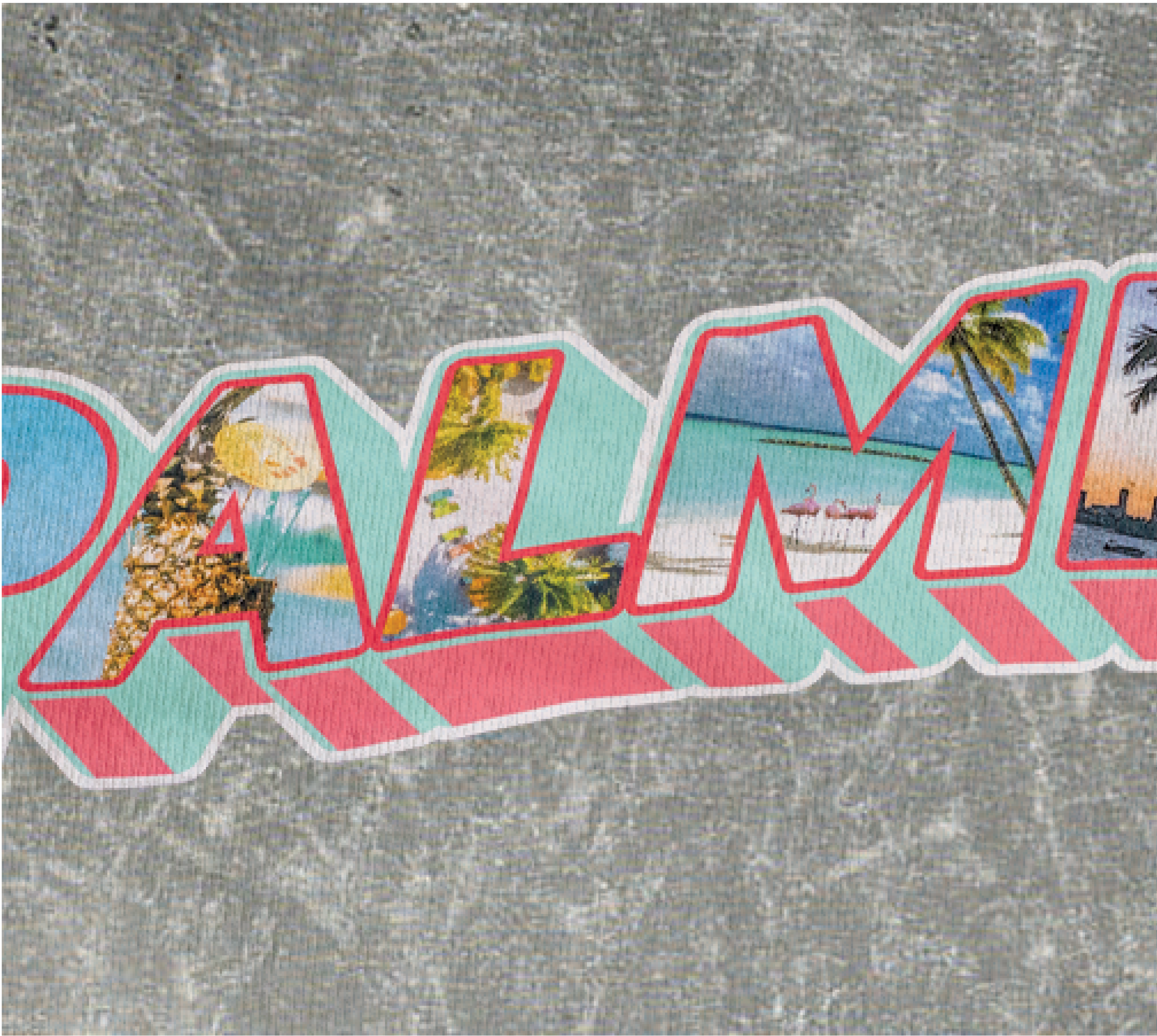
(Left) DTF Print / (Right) Screen Print
When comparing the two methods from a pure cost and speed point of view, Process screen printing is ideal for printing garments in bulk, whereas Direct-to-film Transfer is a better method for printing small quantities, such as 50 shirts.
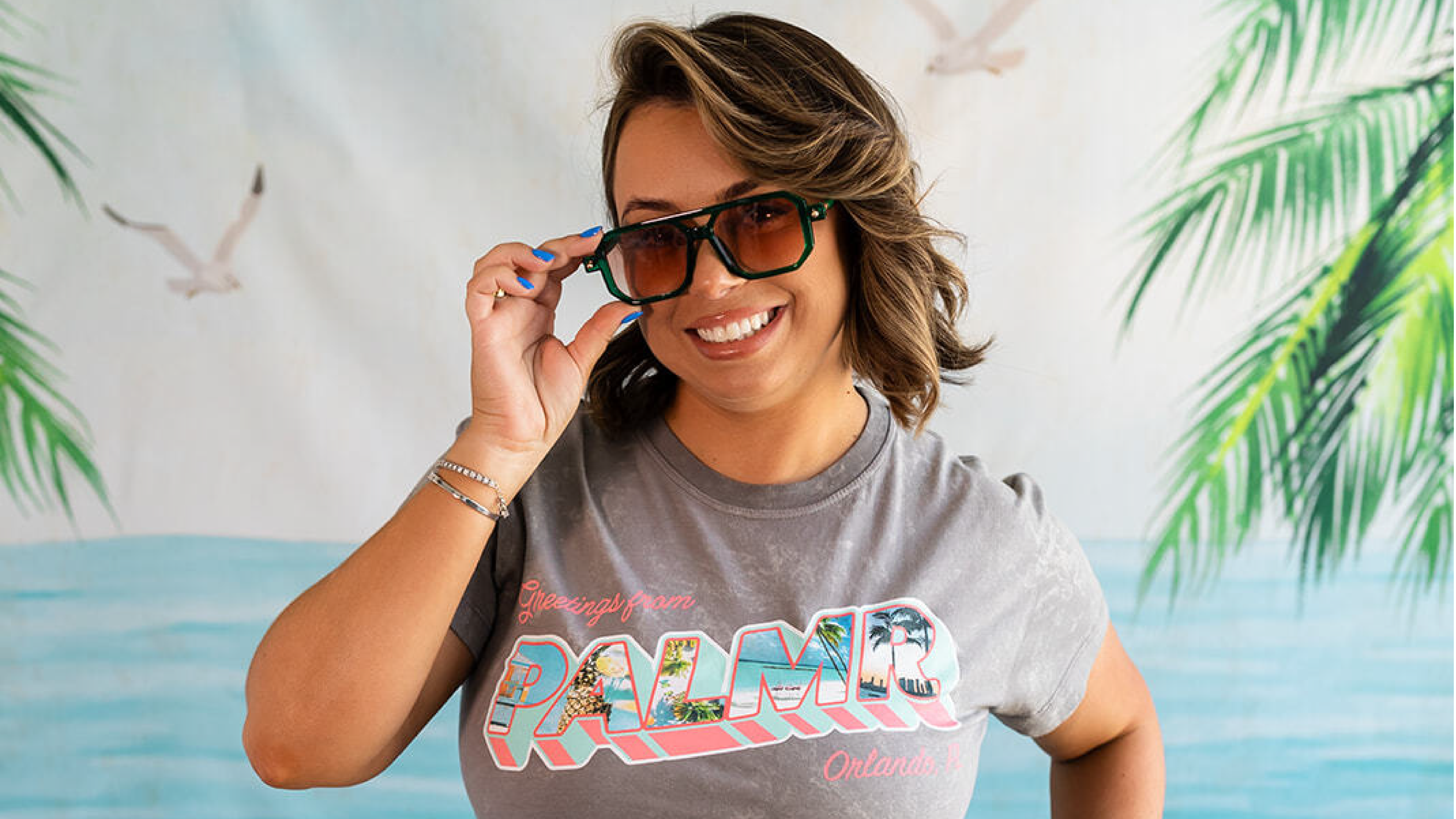
Screen-Printed T-shirt design is from Palmr Style’s Greeting which you can check out here.
Overall, this printing experiment was very fun and beneficial, allowing us to compare and contrast the three decoration methods. Choosing the best method to recreate your designs can be tricky with all of the different decoration options and ink types that we offer. We fully understand this, which is why our Threadbird team is here to offer recommendations and tips to guide you along the way in your creative journey. Get in touch with us to share your ideas, and our Customer Specialist will connect with you to get started!

Hey, It's Threadbird, here to be your expert guide for all things printing, apparel, and merch. Our brand has been in the custom merch game for 16+ years. We know the ins and outs of all of your favorite products. We are here to help your brand fly high with our knowledge and expertise!
Process Printing
Process printing is best used for artwork with high amounts of detail or color. While the print will still be vibrant and highly detailed with process printing, you will lose some elements of detail from what you see on your computer screen to the printed design itself.
What is process printing and when should I use it?
Process printing is designed to capture smaller details within a design, perfect for photographs or complex digital designs. We recommend using lighter-colored shirts for the best results with process printing.
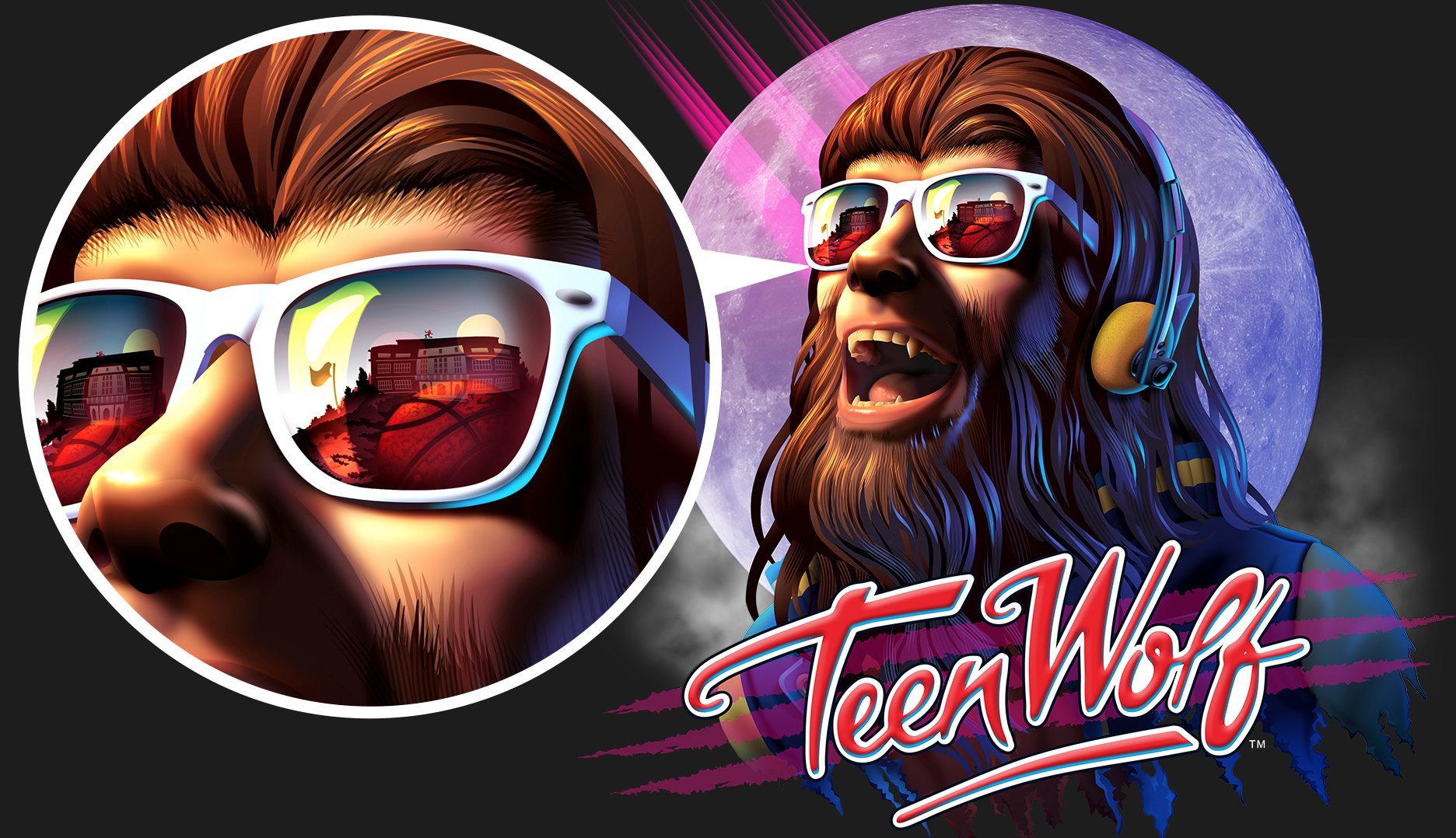
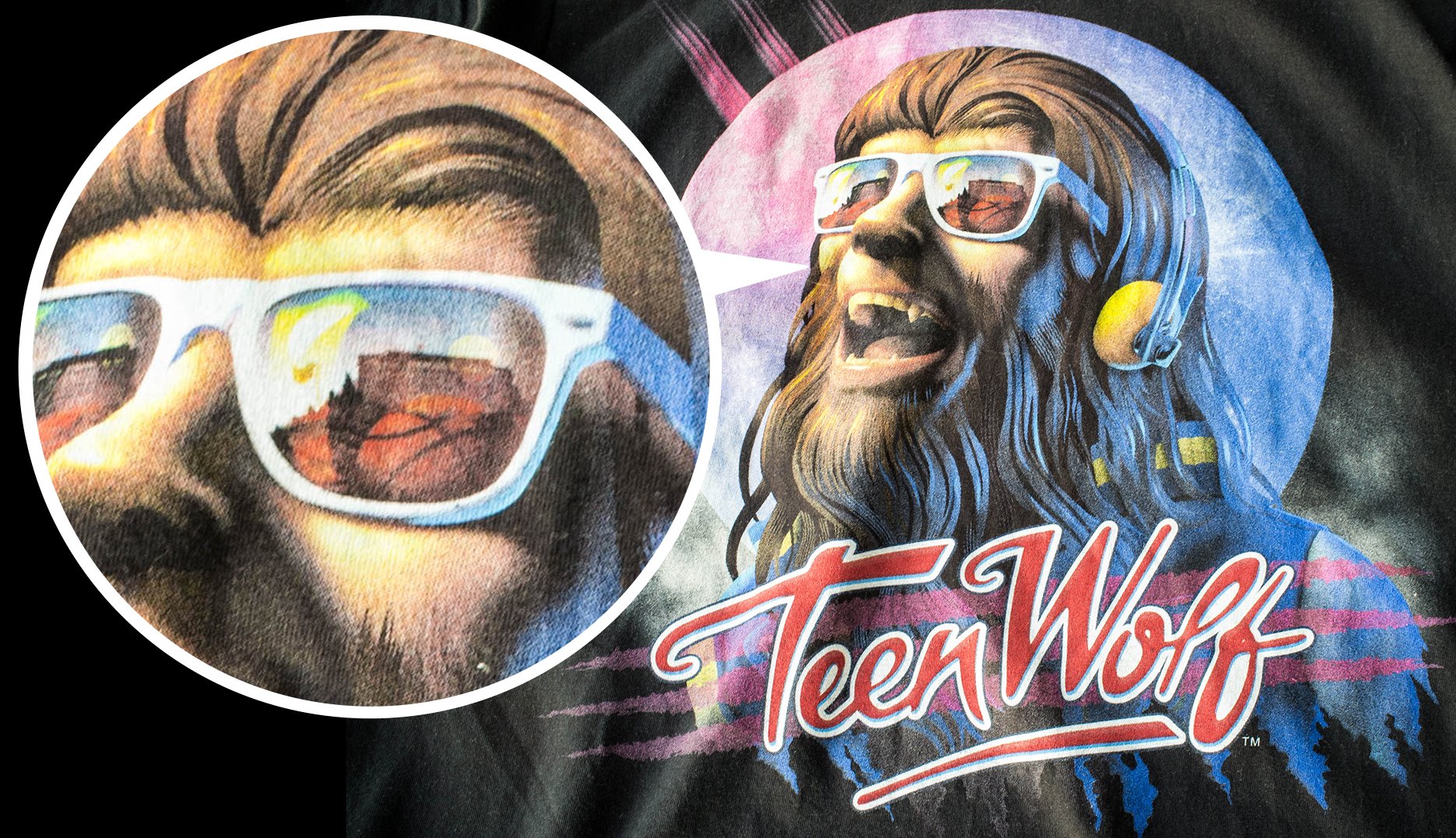
Left: Original art is Detailed & Vibrant | Right: Highly detailed print will lose some Detail & Vibrancy
Halftone Screen Printing
When the human eye is up very close to the halftone screen printed image, it will be able to see these tiny dots. Your image will lose some detail when screen printing with halftones.
What are halftones and when should I use this method?
Halftones are small dots blended in a printed design that vary in size and space to create the effect of smooth, full-color imagery. Halftone screen printing is a great solution if your artwork contains gradients or complex detail (such as a photograph).
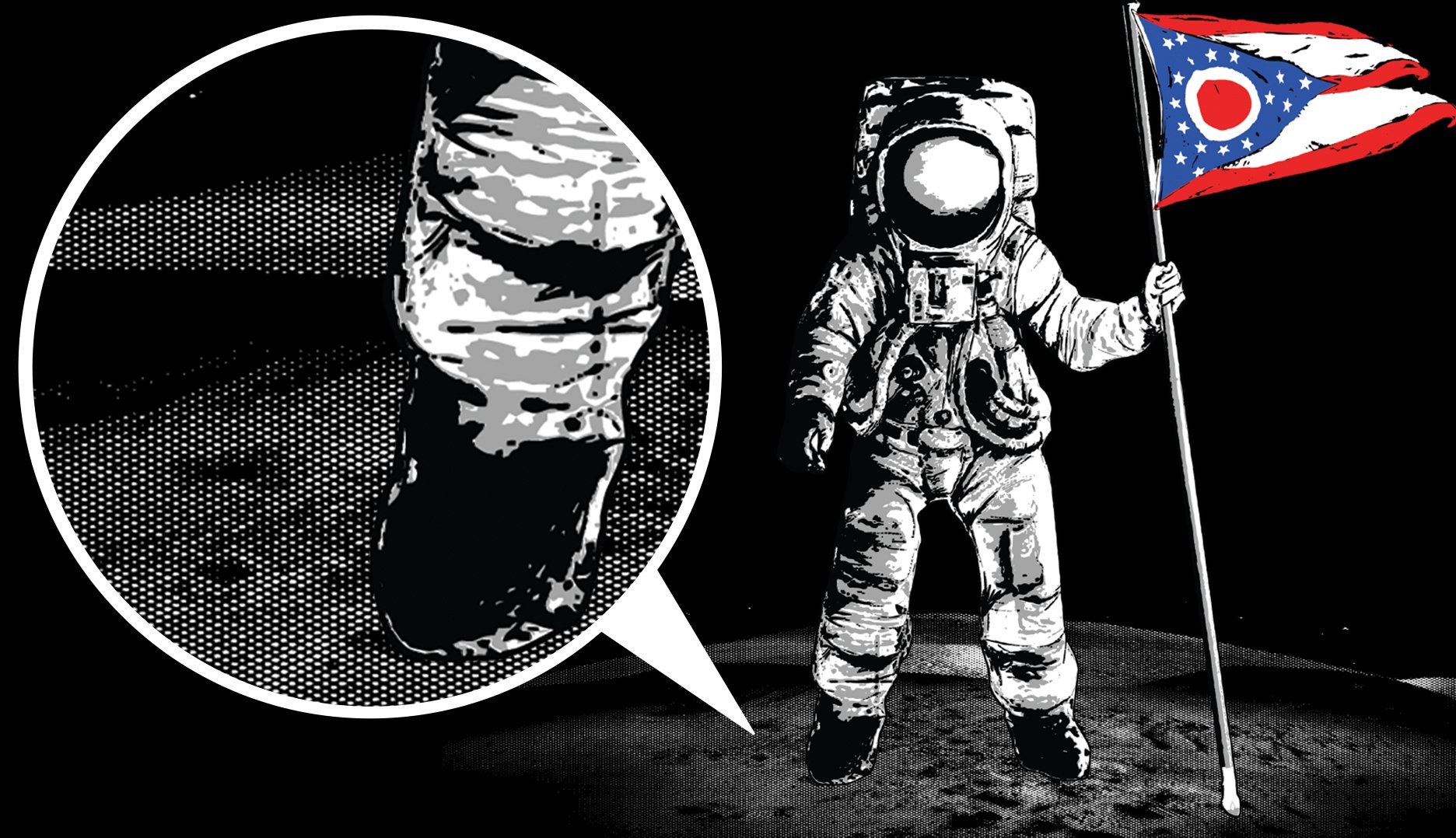
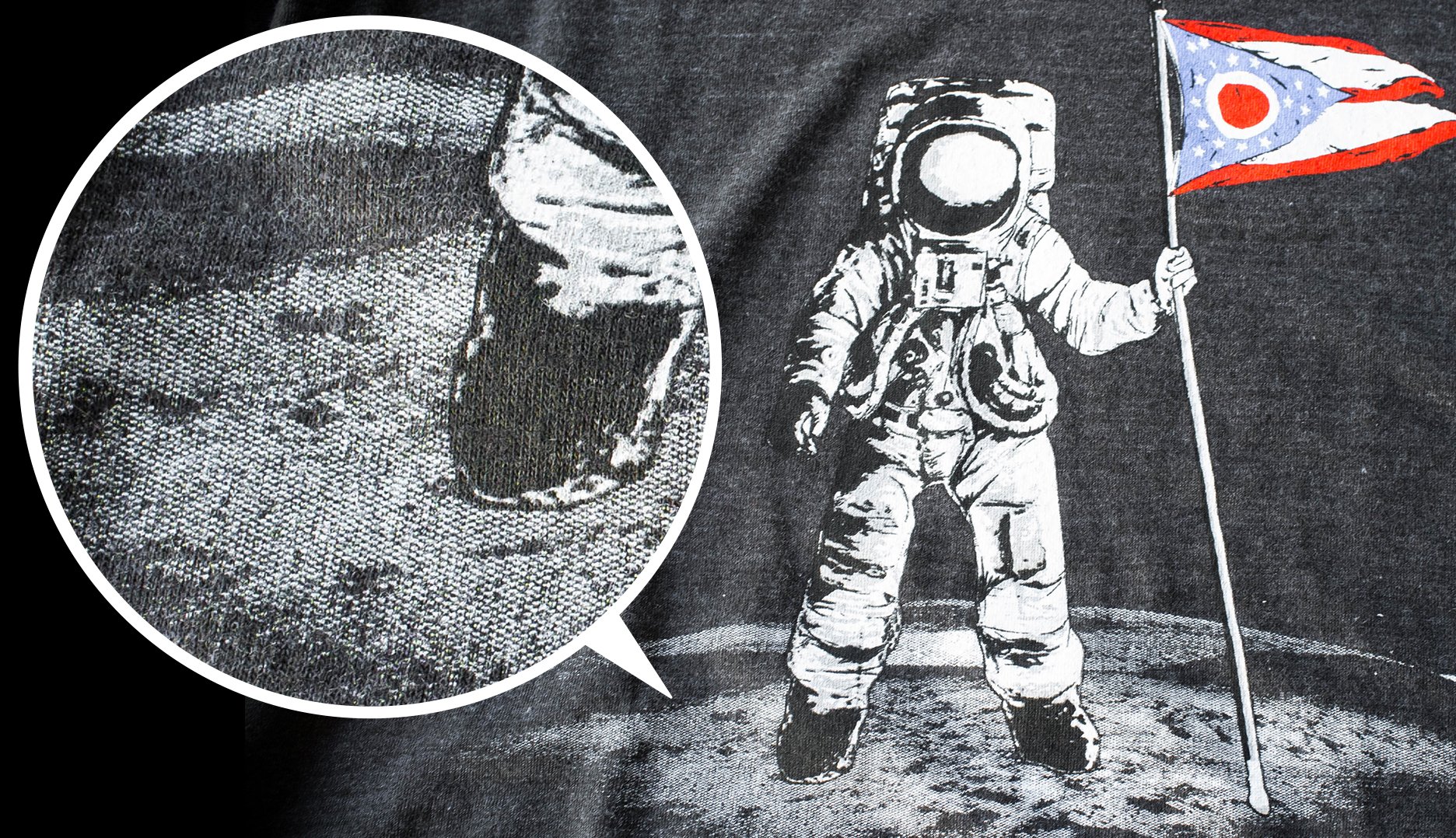
Left: Original Artwork | Right: Printed Using Halftones
Can I save money by using halftones?
If you want to save money by simulating multiple colors - you have the option to use one color with halftones. Example: Use one red base color and by creating halftones on part of the image, it will look like you have both a dark red and light red.
Screen Printing Over Seams
If the design is closer than 1/2" to the seam, this can cause screen printing inconsistencies. The seams prevent the screen from lying completely flat on top of the garment when printing. When the screens are placed on top of the seam it can print unevenly in this area. We do not recommend adding detailed designs over the seam.
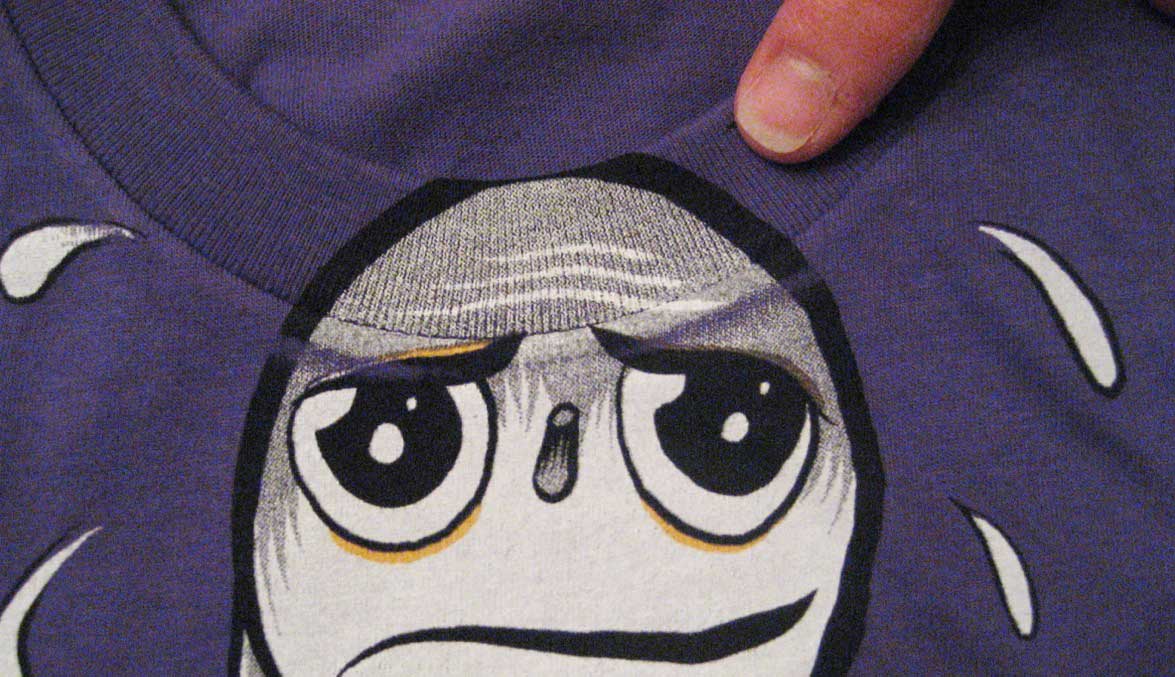
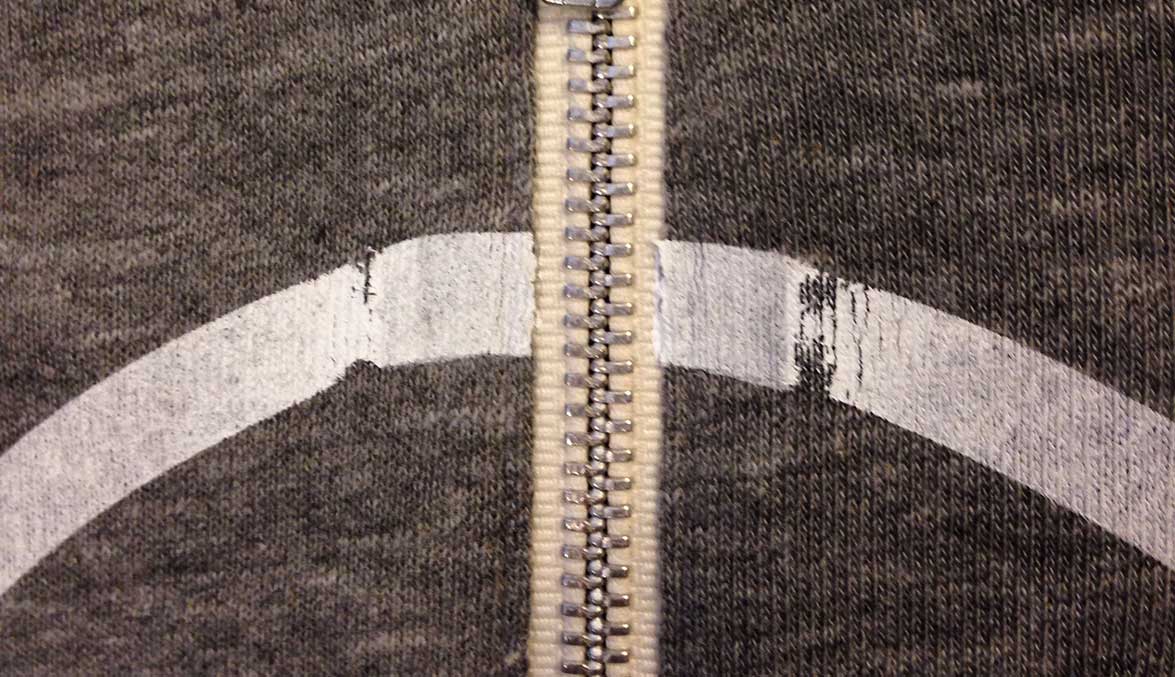
Left: Gaps in print over collar seam | Right: Gaps in print where fabric is raised near zipper
What amount of space should I leave when screen printing near seams?
It is recommended that you leave at least 1/2" of space between the edge of your screen printing design and any shirt seams.
If you have a “Seams Warning” on your mock and you notice there is plenty of room in between your design and the seam, keep in mind that the mocks typically show only two standard garment types: "medium men's garment" and "small women's garment". If your order has garments that are smaller than the garment template used on the mock, this could be the reason for the warning.
Can I print over seams?
Screen printing over seams is not recommended. When you print over seams, a gap is created in the print where the ink from the screen does not touch the shirt due to the ridge caused by the seam. This causes inconsistencies in the print from shirt to shirt which is why we strongly recommend against printing over seams.
No PMS Matching
When using specific garment types, inks or garment colors, Pantone (PMS) color matching is not possible. This is a case-by-case scenario and we've done our best to cover some instances below.
When Using Specific Garment Types (Fabrics)...
The use of tri-blend or blended garments can cause the colors in your final printed design to vary from what you see in the mock when you use waterbased or discharge ink. The ink typically takes on the color of the garment and can appear muted. If you’re going for a vintage-y or less vibrant effect, consider using waterbased or discharge inks.
Tri-Blend garments also have a unique blend of materials that cause the ink to not permeate the fabric as well as 100% cotton garments. We do not recommend printing on tri-blend garments if you are wanting vibrant colors or need to match specific pantone inks.
White Waterbase print looks vintage on Triblend garment
When Using Waterbase or Discharge Inks...
Due to the nature of waterbase and discharge printing, it is not possible to match colors printed to the pantone colors used. Certain garment brands, colors, and fabrics perform better with these ink types than others - please reach out to your customer service representative for more information.
When Using Specific Garment Colors...
Avoid the following colors when printing with Discharge or Premium Standard inks: Kelly Green, Red, Royal Blue, Lapis, Cobalt, Purple, Forest, Teal, & Turquoise. If you are going to print on these shirt colors, please note that lighter ink colors such as white or yellow will be influenced by the shirt color remaining underneath.
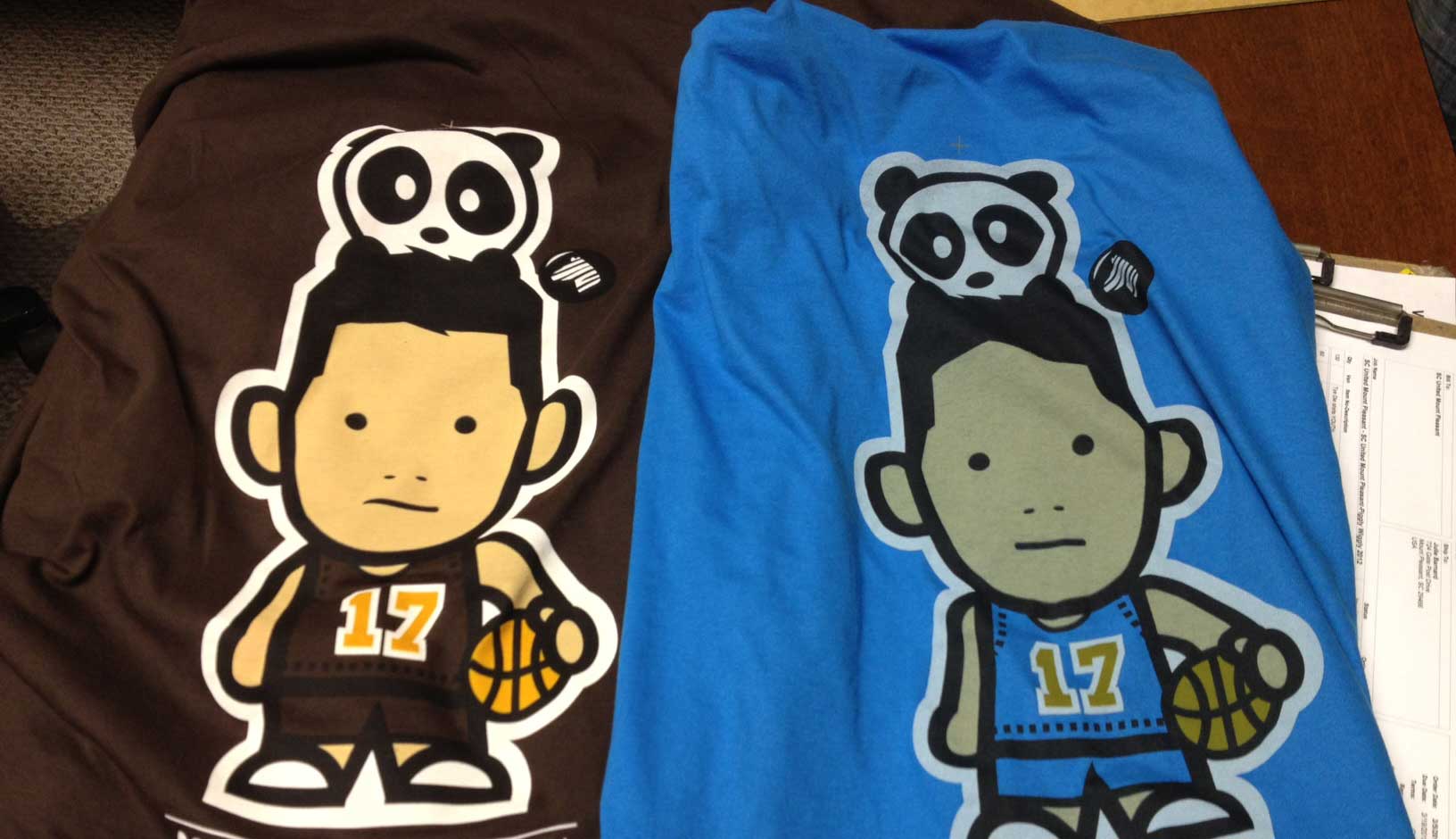
Turquoise shirt color shows through print
I printed on the same ink type/garment type combo in the past - will the final product look exactly the same as last time?
If you printed waterbase/discharge on a certain garment brand in the past, the final product may differ from your current order order. This is due to the manufacturing process of the shirt itself. It’s possible to have a batch of 100% cotton garments, for example, that waterbase/discharge differently than any other given batch.
Privacy Policy
This privacy policy has been compiled to better serve those who are concerned with how their 'Personally identifiable information' (PII) is being used online. PII, as used in US privacy law and information security, is information that can be used on its own or with other information to identify, contact, or locate a single person, or to identify an individual in context. Please read our privacy policy carefully to get a clear understanding of how we collect, use, protect or otherwise handle your Personally Identifiable Information in accordance with our website.
What personal information do we collect from the people that visit our blog, website or app?
When ordering or registering on our site, as appropriate, you may be asked to enter your name, email address, mailing address, phone number or other details to help you with your experience.
When do we collect information?
We collect information from you when you subscribe to a newsletter, fill out a form or enter information on our site.
How do we use your information?
We may use the information we collect from you when you register, make a purchase, sign up for our newsletter, respond to a survey or marketing communication, surf the website, or use certain other site features in the following ways:
- To quickly process your transactions.
- To send periodic emails regarding your order or other products and services.
How do we protect visitor information?
Our website is scanned on a regular basis for security holes and known vulnerabilities in order to make your visit to our site as safe as possible.
We do not use Malware Scanning.
Your personal information is contained behind secured networks and is only accessible by a limited number of persons who have special access rights to such systems, and are required to keep the information confidential. In addition, all sensitive/credit information you supply is encrypted via Secure Socket Layer (SSL) technology.
We implement a variety of security measures when a user enters, submits, or accesses their information to maintain the safety of your personal information.
All transactions are processed through a gateway provider and are not stored or processed on our servers.
Do we use 'cookies'?
We do not use cookies for tracking purposes.
You can choose to have your computer warn you each time a cookie is being sent, or you can choose to turn off all cookies. You do this through your browser (like Internet Explorer) settings. Each browser is a little different, so look at your browser's Help menu to learn the correct way to modify your cookies.
If you disable cookies off, some features will be disabled that make your site experience more efficient and some of our services will not function properly.
However, you can still place quote requests.
Third Party Disclosure
We do not sell, trade, or otherwise transfer to outside parties your personally identifiable information.
Third party links
We do not include or offer third party products or services on our website.
Google's advertising requirements can be summed up by Google's Advertising Principles. They are put in place to provide a positive experience for users. https://support.google.com/adwordspolicy/answer/1316548?hl=en
Google, as a third party vendor, uses cookies to serve ads on our site. Google's use of the DART cookie enables it to serve ads to our users based on their visit to our site and other sites on the Internet. Users may opt out of the use of the DART cookie by visiting the Google ad and content network privacy policy.
We have implemented the following:
- Remarketing with Google AdSense
- Google Display Network Impression Reporting
- Demographics and Interests Reporting
We along with third-party vendors, such as Google use first-party cookies (such as the Google Analytics cookies) and third-party cookies (such as the DoubleClick cookie) or other third-party identifiers together to compile data regarding user interactions with ad impressions, and other ad service functions as they relate to our website.
Opting out: Users can set preferences for how Google advertises to you using the Google Ad Settings page. Alternatively, you can opt out by visiting the Network Advertising initiative opt out page or permanently using the Google Analytics Opt Out Browser add on.
California Online Privacy Protection Act
CalOPPA is the first state law in the nation to require commercial websites and online services to post a privacy policy. The law's reach stretches well beyond California to require a person or company in the United States (and conceivably the world) that operates websites collecting personally identifiable information from California consumers to post a conspicuous privacy policy on its website stating exactly the information being collected and those individuals with whom it is being shared, and to comply with this policy. - See more at: https://consumercal.org/california-online-privacy-protection-act-caloppa/#sthash.0FdRbT51.dpuf
According to CalOPPA we agree to the following:
Users can visit our site anonymously. Once this privacy policy is created, we will add a link to it on our home page, or as a minimum on the first significant page after entering our website. Our Privacy Policy link includes the word 'Privacy', and can be easily be found on the page specified above.
Users will be notified of any privacy policy changes:
- On our Privacy Policy Page
Users are able to change their personal information:
- By emailing us
- By calling us
- By chatting with us or sending us a ticket
How does our site handle do not track signals?
We honor do not track signals and do not track, plant cookies, or use advertising when a Do Not Track (DNT) browser mechanism is in place.
Does our site allow third party behavioral tracking?
It's also important to note that we do not allow third party behavioral tracking
COPPA (Children Online Privacy Protection Act)
When it comes to the collection of personal information from children under 13, the Children's Online Privacy Protection Act (COPPA) puts parents in control. The Federal Trade Commission, the nation's consumer protection agency, enforces the COPPA Rule, which spells out what operators of websites and online services must do to protect children's privacy and safety online.
We do not specifically market to children under 13.
Fair Information Practices
The Fair Information Practices Principles form the backbone of privacy law in the United States and the concepts they include have played a significant role in the development of data protection laws around the globe. Understanding the Fair Information Practice Principles and how they should be implemented is critical to comply with the various privacy laws that protect personal information.
In order to be in line with Fair Information Practices we will take the following responsive action, should a data breach occur:
We will notify the users via email within 7 business days.
We also agree to the individual redress principle, which requires that individuals have a right to pursue legally enforceable rights against data collectors and processors who fail to adhere to the law. This principle requires not only that individuals have enforceable rights against data users, but also that individuals have recourse to courts or a government agency to investigate and/or prosecute non-compliance by data processors.
CAN SPAM Act
The CAN-SPAM Act is a law that sets the rules for commercial email, establishes requirements for commercial messages, gives recipients the right to have emails stopped from being sent to them, and spells out tough penalties for violations.
We collect your email address in order to:
- Send information, respond to inquiries, and/or other requests or questions.
- Process orders and to send information and updates pertaining to orders
- We may also send you additional information related to your product and/or service.
- Market to our mailing list or continue to send emails to our clients after the original transaction has occurred
To be in accordance with CANSPAM we agree to the following:
- NOT use false, or misleading subjects or email addresses
- Identify the message as an advertisement in some reasonable way
- Include the physical address of our business or site headquarters
- Monitor third party email marketing services for compliance, if one is used.
- Honor opt-out/unsubscribe requests quickly
- Allow users to unsubscribe by using the link at the bottom of each email
If at any time you would like to unsubscribe from receiving future emails:
Follow the instructions at the bottom of each email and we will promptly remove you from ALL correspondence.
Contacting Us
If there are any questions regarding this privacy policy you may contact us using the information below:
https://www.threadbird.com, 3715 Vineland Rd, Orlando, FL 32811 • [email protected]
Last Edited on 2021-04-08
Contract Printing
If you will be supplying your own garments for us to print on, this page is just for you! We're happy to get you started with our Contract Screen Printing Information & Pricing.
*Upcharge for Speciality Inks & Certain Print Locations
| 100-199 | 200-499 | 500-999 | 1000-2499 | 2500-4999 | |
|---|---|---|---|---|---|
| No Underbase | $3.50 | $2.60 | $1.75 | $1.60 | $1.40 |
| Underbase | $4.00 | $3.00 | $2.00 | $1.85 | $1.45 |
| Add a Color | $0.55 | $0.40 | $0.30 | $0.30 | $0.25 |
| Extra Location | $2.00 | $1.75 | $1.50 | $1.30 | $1.15 |
| Jumbo Fee | $0.75 | $0.75 | $0.75 | $0.75 | $0.75 |
| Fleece Upcharge | $1.30 | $1.00 | $0.75 | $0.75 | $0.75 |
Contract Screen Printing Rules & Guidelines Checklist:
Before You Send Us Garments
We need to have information upfront about the garments you are sending, including manufacturer, style number, color, and size breakdown. If you are sending cut and sew garments, please send us as much information as you have. We will not start the mock-up process until we have this information, and any delay in receipt of this information will result in corresponding delays in production.
Request Threadbird Ship-To Address
If you supply your own garments, you must request a shipping address specific to your order. Do not send garments until you have approved and paid for your order. If you do not and the garments are shipped to the wrong location, you will be billed for additional shipping to get them where they need to be.
If you are sending garments for a contract printing job with a requested in-hand date or an event date, we can’t schedule the event date until we have tracking for the garments. Your CAS will share an in-hand date required to keep the timeline with you during the estimate process, but that can change if all the garments are not received by the due date.
Label Your Packages
You must have the packages labeled with your name/order # so we know they are your shirts for this specific order. We also use this information and the information shared for the mockup to ensure we can print on the garment you want to use with the style of printing/ink you are requesting and that we have all of your garments. If you don’t, we will charge you our hourly rate to hand-receive them, currently $35/hr. If garments arrive individually polybagged or with manufacturer hang tags that need to be removed, Threadbird will be responsible for their removal and charge our standard hourly rate of $35/hr for the time to remove them.
Combine Your Shipments
We need to receive as few shipments as possible to ensure no errors. If we do not receive all your shirts at once, we will send you one email to let you know. If you supply your garments, you must ensure we have them. Anything not at our shop in time to print when your order is scheduled will be shorted from the order. If all your garments do not arrive within two weeks, we will charge a storage fee for the garments we do have, based on the volume and our standard fulfillment storage rates. If you know your garments won’t all arrive simultaneously, please let us know in advance.
Defective Garments:
We do not replace garments when you supply your own. If your shirts have holes, rips, tears, or any other manufacturer errors, they will be removed from the order unless you request to get all damaged garments. All garments are supplied to Threadbird at the customer’s risk, including any custom cut and sew items and/or custom-dyed items. Threadbird will not be responsible for any print issues related to and/or resulting from garment defects.
Quality of Garments
With contract printing, just like regular printing, you get out what you put in. If you supply low quality garments, we cannot guarantee print quality.
Finishing Prices
All apparel finishing prices are the same whether you or we supply the shirts, however Threadbird must provide either the garments or the finishing items in order to accept the job. We will have additional fees for finishing only. See Finishing Prices.
Ink Changes
Ink changes require a minimum of 25 shirts per change. We only allow 2 changes per design total, that includes all locations.
Blind Shipping
You must notify your Customer Account Specialist if an order must be blind shipped and in a non-branded box.
Contact Us
Online Business Hours
- Monday - Friday - 9am to 5pm (EST)
- Email: [email protected]
- Phone: (855) 611-2060
Orlando, FL (Main Sales Office)
- Monday - Friday - 9am to 4:30pm (EST)
- 7550 Brokerage Drive, Orlando FL 32809
- Email: [email protected]
- Phone: (855) 611-2060 Ext. 1
Other Locations
- Nashville, TN & Grand Rapids, MI (Sorry, but closed to the General Public)
Threadbird's Referral Program
Refer and Earn Rewards!
We’re excited to reward amazing customers like you for spreading the word about Threadbird!
Get rewarded for sharing us with friends, family, and colleagues! When you refer someone to our services, you’ll earn credits toward your next order.
How It Works
We want to make sure that this program is as easy and transparent as everything else we do.


Step 1
Refer a new customer
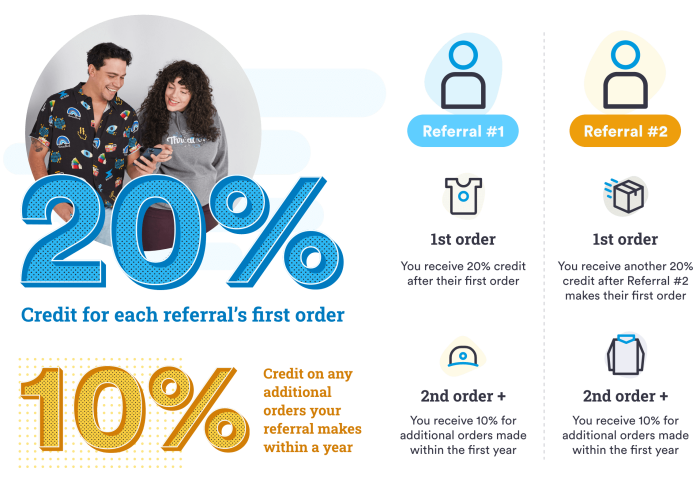
If you refer anyone to us for any of our products or services - screen printing, custom items, and fulfillment - you earn a credit based on 20% of the invoiced amount, minus things like sales tax and shipping costs.
20% for first referral order, 10% for any additional orders your referral places within the first year, credit applies to either bulk production or fulfillment.
Step 2
Referral Confirmation
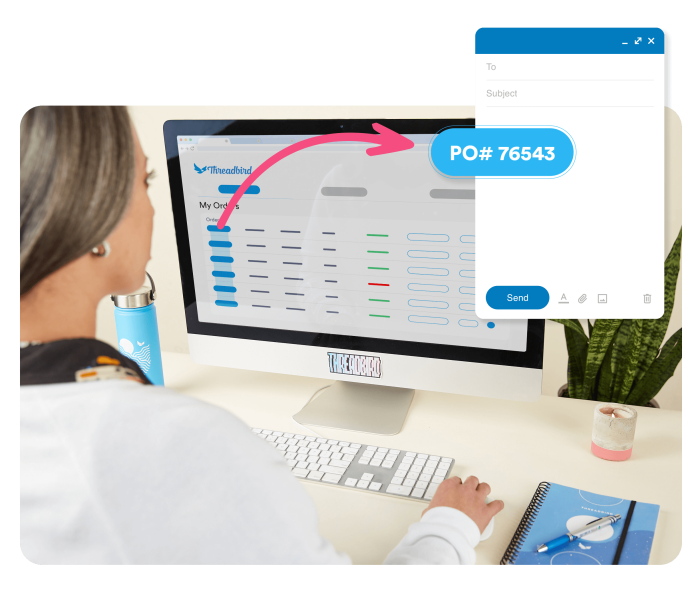
When you send the person, group, or company our way, give them one of your previous or current order numbers from our orders.threadbird.com system - that way, we know who sent them.
They should include that in their first communication to us in the email or via our website in the notes section. We want to make sure that it’s pretty easy to connect the dots, so make sure they at least mention you by name if you aren’t able to give them a previous order number.
The referral can’t have worked or been talking with us before you referred them - we want the referral to be super-transparent to all parties involved.
Step 3
Earn and use credits!
For each new customer that you refer, you will get a 20% credit from their first bulk production order + a 10% credit on the rest of their orders for their first year at Threadbird. Credit can be applied to either bulk production or fulfillment. Credit will arrive in 30 days and to be used in 1 year. No limitations on types/size of order.
- For production invoices, after we close and archive the order, typically 30 days after delivery.
- For fulfillment, 30 days after the referral pays for their fulfillment invoice
You will earn credit for the first year that the referral works with Threadbird.
Questions?
Have any questions or concerns? Feel free to contact us for more info!


Your Orders Are Important to us
Your prints are important to us. Feel free to reach out with any questions at [email protected]. It's our goal to provide you with great service, top quality prints and affordable pricing.